A new meta-analysis pooling data from 34 observational studies suggests that eating roughly four servings of walnuts per week is linked to a 12 percent lower risk of cognitive decline. The analysis, published in the Journal of Alzheimer's Disease in late 2024, adds to a growing body of evidence that specific dietary patterns—and nuts in particular—may help preserve mental sharpness as people age. Lead author Dr. Ana Maria Cova, a nutritional epidemiologist at the University of Barcelona, told reporters that the finding is “encouraging but not definitive,” noting that most of the included studies were observational and cannot prove cause and effect. Still, the consistency of the association across diverse populations is noteworthy. The threshold of four servings per week emerged as the point at which the risk reduction became statistically significant, with little additional benefit observed at higher intakes.
The Walnut-Cognition Link Gains Statistical Weight
The meta-analysis, which combined data from cohorts in North America, Europe, and Asia, included over 100,000 participants followed for an average of six years. Cognitive decline was measured using standardized tests of memory, executive function, and processing speed. After adjusting for age, education, smoking, physical activity, and other dietary factors, those who consumed at least four one-ounce servings of walnuts per week showed a 12 percent lower odds of significant cognitive decline compared to those who ate walnuts less than once a week.
Dr. Cova and her team also examined dose-response relationships. They found that the protective association appeared to plateau at around four servings per week. “Eating more than that didn’t seem to confer much additional benefit in the pooled data,” she said. This aligns with other research on nuts and health outcomes, where moderate, consistent intake often yields the strongest associations. The analysis did not find a significant difference between raw and roasted walnuts, though most studies did not specify preparation methods.
The 12 percent figure is a relative risk reduction, not an absolute one. For a person with a baseline 10 percent risk of cognitive decline over a decade, a 12 percent relative reduction would lower that risk to about 8.8 percent—a modest but meaningful shift at the population level. The authors caution that the confidence intervals around the estimate were wide, and the results should be interpreted with care until randomized controlled trials confirm the findings.
Earlier work has linked walnut consumption to better cognitive performance in cross-sectional studies. For example, a 2020 study from the University of California, Los Angeles found that adults who ate walnuts scored higher on cognitive tests than those who did not. The new meta-analysis strengthens that evidence by pooling multiple datasets, though it cannot rule out the possibility that walnut eaters simply have healthier lifestyles overall.
Why Walnuts Stand Out Among Nuts
Walnuts are nutritionally distinct from other nuts. They contain the highest concentration of alpha-linolenic acid (ALA), a plant-based omega-3 fatty acid, of any commonly eaten nut. A one-ounce serving provides about 2.5 grams of ALA, which the body can partially convert to longer-chain omega-3s like EPA and DHA, though conversion rates are low. Still, even modest amounts of ALA may contribute to brain health by reducing inflammation and supporting cell membrane integrity.
Beyond omega-3s, walnuts are rich in polyphenols, including ellagitannins and urolithins, which have antioxidant and anti-inflammatory properties. These compounds may help reduce oxidative stress in the brain, a key driver of age-related cognitive decline. Walnuts also contain vitamin E in the form of gamma-tocopherol, which protects cell membranes from oxidative damage. Some research suggests gamma-tocopherol may be particularly important for brain health, as it can neutralize reactive nitrogen species.
Almonds and cashews, while nutritious, do not offer the same combination of ALA and polyphenols. Almonds are higher in vitamin E (alpha-tocopherol) but lack ALA, and cashews are lower in both. “Walnuts have a unique nutritional profile that may explain why they keep appearing in brain-health research,” notes Dr. Cova. Additionally, walnuts provide melatonin, a hormone that regulates sleep, and poor sleep is increasingly recognized as a risk factor for cognitive decline.
Of course, no single food is a magic bullet. The overall dietary pattern matters more than any one ingredient. But for those looking to add a brain-supportive snack, walnuts offer a convenient package of nutrients that are hard to find together elsewhere.
Mechanisms Behind the Protective Effect
The potential mechanisms linking walnuts to brain health are multifaceted. One leading hypothesis involves endothelial function. The lining of blood vessels, the endothelium, plays a critical role in regulating blood flow to the brain. Walnuts have been shown to improve endothelial function in clinical trials, partly due to their arginine content, which boosts nitric oxide production. Better blood flow means more oxygen and nutrients reach neurons, supporting cognitive performance.
Another mechanism is the reduction of oxidative stress. The brain is highly susceptible to oxidative damage because of its high oxygen consumption and lipid-rich environment. Walnuts’ polyphenols and vitamin E can scavenge free radicals and reduce markers of oxidative stress, such as malondialdehyde, in both blood and brain tissue. Animal studies have found that walnut-enriched diets lower oxidative damage in the hippocampus, a region critical for memory.
Synaptic plasticity—the ability of synapses to strengthen or weaken over time—is essential for learning and memory. Some animal experiments suggest that walnut extracts enhance long-term potentiation, a cellular correlate of memory formation. In rodents, walnut supplementation has been associated with increased levels of brain-derived neurotrophic factor (BDNF), a protein that supports neuron survival and growth. Low BDNF is linked to Alzheimer’s disease and other dementias.
Finally, walnuts may interfere with the accumulation of beta-amyloid plaques, a hallmark of Alzheimer’s pathology. In a 2020 mouse study, a walnut-enriched diet reduced amyloid deposition and improved spatial memory. While mouse results do not always translate to humans, they provide a plausible biological pathway. Dr. Cova’s meta-analysis did not include biomarker data, so it remains unclear whether the cognitive benefits are mediated through amyloid reduction or other pathways.
What Four Servings Per Week Looks Like
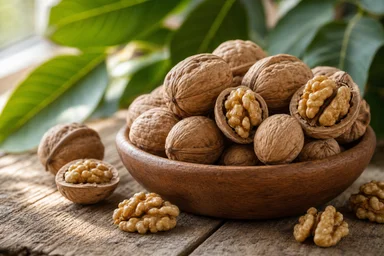
A standard serving of walnuts is one ounce, or about 28 grams. That translates to roughly 14 walnut halves, or a quarter cup of chopped walnuts. Four servings per week means consuming about four ounces total—a small handful most days. For context, a typical bag of shelled walnuts sold in supermarkets contains around 16 ounces, so one bag would last about a month if eaten at this rate.
Incorporating walnuts into meals is straightforward. They can be added to oatmeal or yogurt at breakfast, sprinkled over salads at lunch, or blended into smoothies for an afternoon snack. Walnuts also work well in savory dishes: they can be chopped and used as a crust for baked fish or chicken, or stirred into whole-grain pilafs. Roasting walnuts at a low temperature (around 350°F for 8–10 minutes) can enhance their flavor without damaging the delicate fats, though raw walnuts retain the most ALA.
Storage matters because walnuts are high in polyunsaturated fats, which can go rancid quickly. It is best to keep them in an airtight container in the refrigerator, where they will stay fresh for up to six months. Alternatively, they can be frozen for up to a year. Buying unshelled walnuts may extend shelf life, as the shell protects the kernel from oxygen and light.
For those who dislike the texture or taste, walnut oil is an alternative. It has a rich, nutty flavor and can be used in salad dressings or drizzled over vegetables. However, walnut oil contains little to no fiber or protein, and some polyphenols are lost during processing. Whole walnuts are generally preferred for maximum benefit.
Study Design and Limitations to Consider
The meta-analysis included only observational studies, mostly prospective cohort designs. Observational research can identify associations but cannot prove causation. People who eat walnuts regularly tend to be more educated, have higher incomes, and engage in other health-promoting behaviors—factors that independently reduce dementia risk. Although the authors adjusted for many confounders, residual confounding is possible. For instance, no study in the meta-analysis controlled for hearing loss or social engagement, both of which affect cognitive decline.
Another limitation is the heterogeneity of cognitive decline definitions across studies. Some used the Mini-Mental State Examination, others used the Telephone Interview for Cognitive Status, and a few relied on self-reported memory complaints. Combining these endpoints may obscure differences in how walnuts affect specific cognitive domains. The dose-response analysis was also limited by the small number of studies that reported intake in a granular way.
Randomized controlled trials (RCTs) with cognitive endpoints are needed to confirm the findings. A handful of small RCTs have tested walnut-enriched diets and found modest improvements in working memory and processing speed, but results are mixed. The Walnuts and Healthy Aging study, a large multicenter trial currently underway in Spain and California, is expected to provide more definitive evidence by 2027. Until then, the 12 percent estimate should be viewed as suggestive rather than conclusive.
Dr. Cova emphasized that the meta-analysis does not recommend walnuts as a substitute for medical care. “If someone is experiencing memory problems, they should see a doctor, not just eat more walnuts,” she said. The findings are most relevant for middle-aged and older adults looking to maintain cognitive health as part of a broader preventive approach.
Practical Steps to Incorporate Walnuts Now
For readers who want to act on the current evidence, the simplest step is to replace a less nutritious snack with a serving of walnuts. Instead of reaching for chips or cookies, try a small handful of walnuts. Pairing them with a piece of fruit or a few dark chocolate chips can make the snack more satisfying. A 2023 study found that people who substituted walnuts for processed snacks saw improvements in dietary quality scores within eight weeks.
Walnuts can be added to breakfast in multiple ways. Stirring chopped walnuts into oatmeal or overnight oats adds crunch and healthy fats. They also complement yogurt and berries well. For a savory option, try mixing walnuts into a whole-grain bowl with roasted vegetables and a lemon-tahini dressing. Another idea is to use ground walnuts as a coating for chicken or fish instead of breadcrumbs—this boosts omega-3 intake and reduces refined carbohydrates.
Meal prepping can help maintain consistency. Portion out one-ounce bags of walnuts at the start of the week so they are ready to grab. Adding walnuts to a weekly shopping list ensures they are on hand. For those who find raw walnuts bitter, a brief roast can mellow the flavor. Just be careful not to overheat them, as high temperatures can degrade ALA.
It is also worth considering walnut oil for dressings. A simple vinaigrette of walnut oil, balsamic vinegar, and Dijon mustard can elevate a salad while providing some ALA. However, walnut oil is not suitable for cooking at high heat because of its low smoke point. For sautéing or roasting, olive or avocado oil are better choices.
Broader Brain-Healthy Diet Principles
Walnuts are just one component of a brain-supportive diet. The MIND diet—a hybrid of the Mediterranean and DASH diets—emphasizes leafy greens, berries, whole grains, fish, and nuts, including walnuts. Observational studies suggest that strict adherence to the MIND diet can reduce Alzheimer’s risk by as much as 53 percent. Walnuts fit naturally into this pattern, but they work best alongside other nutrient-dense foods.
Specifically, combining walnuts with leafy greens may enhance absorption of fat-soluble vitamins like vitamin K and lutein. Berries provide anthocyanins that complement walnuts’ polyphenols. Fatty fish like salmon supply preformed DHA, which may be more directly usable by the brain than the ALA in walnuts. A 2024 study from Rush University found that people who followed a diet rich in these foods performed better on cognitive tests over a 10-year period.
Avoiding harmful dietary components is equally important. High intakes of saturated fats, refined sugars, and ultra-processed foods have been linked to cognitive decline and brain shrinkage. Reducing these while increasing walnuts and other whole foods may offer synergistic benefits. Physical activity, social connection, and cognitive stimulation also build cognitive reserve, which can delay the onset of dementia symptoms.
In short, walnuts are a useful addition to a brain-healthy lifestyle, but they are not a standalone solution. The current evidence supports eating them regularly as part of an overall pattern of good nutrition and healthy habits. As Dr. Cova put it, “Think of walnuts as one tool in a toolbox, not the whole workshop.”
This article is for informational purposes only and does not constitute medical advice. Individual dietary needs vary, and anyone with concerns about cognitive health should consult a qualified healthcare professional.