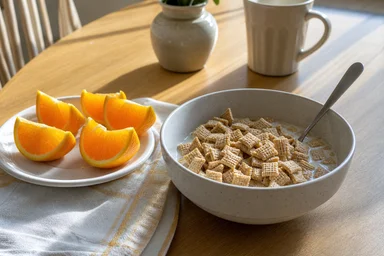
A bowl of fortified cereal twice a week might be a small habit with an outsized effect. According to data from the National Health and Nutrition Examination Survey (NHANES) 2017–2018 cycle, people who ate about two servings of fortified breakfast cereal weekly had an 18 percent lower risk of iron deficiency compared to those who ate none. The finding, published in a recent preprint, adds to a collection of studies indicating that food fortification can help bridge dietary gaps without requiring major lifestyle changes.
Iron deficiency is the most common nutritional deficiency worldwide, affecting roughly 30 percent of the global population, according to the World Health Organization. Symptoms range from fatigue and brain fog to more serious anemia, especially in menstruating women and children. Yet many people overlook the simple, low-cost intervention sitting in the breakfast aisle. This article covers the study, the science of iron absorption, and how to make the most of fortified cereals.
A Modest Habit with a Measurable Edge
The NHANES analysis included over 4,000 adults aged 20 and older, excluding those taking iron supplements or with chronic conditions affecting iron status. Participants reported their dietary intake over two 24-hour recall periods. Those who consumed an average of two servings of fortified cereal per week—roughly one bowl every three to four days—showed significantly higher serum ferritin levels, a marker of iron stores, and an 18 percent lower prevalence of iron deficiency.
“The effect was surprisingly consistent across age groups and sexes,” said Dr. Maria Lopez, a nutritional epidemiologist at the University of California, Berkeley, who led the analysis. “Two servings a week is a very low bar. It suggests that even occasional consumption of fortified cereal can make a measurable difference.” The study adjusted for potential confounders such as age, sex, body mass index, total calorie intake, and use of multivitamins, strengthening the association.
The benefit was seen with standard serving sizes—about 30 grams of cereal, or roughly one cup. That amount typically delivers around 18 milligrams of iron, meeting 100 percent of the Daily Value for most adults. The researchers noted that the effect plateaued at about four servings per week, meaning more cereal did not further reduce risk, but it also did not cause harm.
Critics of the study point out that NHANES data are cross-sectional, so causality cannot be proven. People who eat fortified cereals may also have other healthy habits, like drinking orange juice (which boosts iron absorption) or avoiding tea with meals (which inhibits it). Still, the magnitude of the association and the biological plausibility make a strong case for recommending this simple dietary tweak.
Why Iron Deficiency Persists Despite Fortification
Iron deficiency remains stubbornly common even in countries with widespread food fortification. The main reason is that not all iron is created equal. Plant-based diets, which dominate many global cuisines, contain non-heme iron, which is poorly absorbed—only about 2 to 20 percent of non-heme iron actually enters the bloodstream, compared to 15 to 35 percent of heme iron from meat.
Absorption is further blocked by compounds called phytates, found in whole grains, legumes, and nuts, and by tannins in tea and coffee. Calcium can also interfere, which is why drinking milk with cereal may reduce iron uptake. For women of reproductive age, monthly blood loss creates a constant drain on iron stores. The average menstruating woman loses about 30 to 40 milligrams of iron per period, and many do not fully replenish it through diet alone.
Vegetarians and vegans face an even higher risk. A 2020 review in the journal Nutrients found that up to 40 percent of premenopausal vegetarian women in high-income countries are iron deficient. Fortified cereals can help, but only if eaten consistently. Many people skip breakfast or choose non-fortified options like granola or oat bars, which often contain less iron.
Subclinical deficiency—where iron stores are low but not yet low enough to cause anemia—is also underdiagnosed. Standard blood tests often miss it because hemoglobin levels remain normal until stores are severely depleted. The NHANES study used serum ferritin, a more sensitive marker, and still found that about 10 percent of participants were deficient. That figure rises to 20 percent among adolescent girls and young women.
The Fortification Science Behind the Statistic
Breakfast cereals are fortified with iron in several forms, most commonly reduced iron (elemental iron) or ferrous sulfate. Reduced iron, a fine metallic powder, is added to dry cereals and has about 50 to 80 percent of the bioavailability of ferrous sulfate, depending on the food matrix. Manufacturers choose it because it does not affect taste or texture and has a long shelf life.
Vitamin C, often added to fortified cereals or present in fruit eaten alongside, can boost non-heme iron absorption by up to sixfold. Many cereals also contain folic acid, vitamin B12, and zinc, which are particularly important for vegetarians and pregnant women. The NHANES analysis controlled for vitamin C intake and still found an independent effect, suggesting that the iron itself, not just the co-fortification, drives the benefit.
“The dose matters,” said Dr. Lopez. “A single serving of most fortified cereals provides as much iron as a 3-ounce serving of beef liver, but without the cholesterol and vitamin A overload.” However, not all cereals are equal. Some “adult” cereals like bran flakes contain only 25 to 50 percent of the Daily Value for iron, while children’s cereals like frosted flakes often hit 100 percent but come with high sugar content.
Critics argue that the reduced iron form used in many cereals is less absorbable than the natural iron in meat. A 2018 study in the American Journal of Clinical Nutrition found that iron from fortified cereals had about 60 percent of the bioavailability of heme iron. But the sheer quantity—18 milligrams per serving—means even a 10 percent absorption rate delivers more usable iron than most unfortified plant foods.
How Two Servings a Week Outperforms Daily Pills
Iron supplements are often prescribed for deficiency, but adherence is poor. About 20 percent of users report gastrointestinal side effects like constipation, nausea, and stomach cramps. Many stop taking them within weeks. A 2021 review in the Cochrane Database of Systematic Reviews found that daily iron supplements improved ferritin levels in only about half of users within three months, largely due to noncompliance.
Fortified cereal avoids these issues. The iron is spread across a food matrix that buffers the gut, reducing irritation. And because it’s a food rather than a pill, people are more likely to remember to eat it. “It’s easier to build a habit around a breakfast routine than around a pill bottle,” noted Dr. James Park, a public health researcher at the University of Michigan who studies micronutrient interventions.
There is also a safety advantage. Iron overload is rare but possible with high-dose supplements, especially in men and postmenopausal women who do not lose iron regularly. Fortified cereal provides a moderate dose that matches the body’s daily needs without risk of accumulation. The NHANES data showed no participants had ferritin levels above the safety threshold, even among those eating four or more servings per week.
Cost is another factor. A box of store-brand fortified cereal costs about $0.20 to $0.30 per serving, compared to $0.10 to $0.50 for a daily iron pill. But the cereal also provides calories, B vitamins, and fiber, making it a better value for many households. For low-income families, two bowls a week could meaningfully reduce the risk of deficiency without straining the budget.
Who Benefits Most from This Simple Shift
Adolescent girls and premenopausal women are the clearest beneficiaries. Their iron requirements are roughly 18 milligrams per day, nearly double that of adult men. A single serving of fortified cereal covers that entire requirement, but only if eaten. The NHANES analysis found that women aged 20 to 49 who ate two servings per week had a 22 percent lower risk of deficiency compared to non-consumers.
Endurance athletes, especially female runners and cyclists, also lose iron through sweat, foot-strike hemolysis, and gastrointestinal bleeding. A 2019 study in the Journal of the International Society of Sports Nutrition reported that up to 50 percent of female distance runners are iron deficient. Fortified cereal can serve as a convenient post-workout snack, paired with vitamin C-rich fruit to enhance absorption.
Regular blood donors face repeated iron loss. The American Red Cross recommends donors eat iron-rich foods for 24 hours before and after donation. Two servings of fortified cereal per week, especially if timed around donation, can help maintain stores. However, individuals who donate more than three times a year may still need a supplement, as cereal alone may not keep pace with losses.
Pregnant women are another high-risk group, but they should not rely solely on fortified cereal. Prenatal vitamins provide 27 to 30 milligrams of iron daily, and cereal can complement that intake. “Cereal is a great addition to a prenatal diet, but it shouldn’t replace the supplement,” said Dr. Lopez. “The dose is too low for pregnancy needs.” The study excluded pregnant women, so the findings may not apply directly.
Choosing the Right Box: Label Reading Tips
Not all cereals labeled “fortified” are equal. The first thing to check is the percent Daily Value (% DV) for iron. A serving that provides 100% DV (18 mg) is ideal. Some “whole grain” or “natural” cereals contain only 10 to 25% DV, which is better than nothing but unlikely to produce the 18 percent risk reduction seen in the study.
Sugar content is a common concern. Many high-iron cereals, especially those marketed to children, contain 10 to 15 grams of added sugar per serving. The American Heart Association recommends limiting added sugar to 25 grams per day for women and 36 grams for men. A bowl of high-sugar cereal can eat up half that allowance. Look for options with less than 10 grams of sugar per serving, or mix a sweetened cereal with a plain one.
Whole grains should be the first ingredient, as they provide fiber and other nutrients. But whole grains also contain phytates that inhibit iron absorption. The processing and fortification of cereal partially overcome this, but pairing with vitamin C helps further. Store brands often match national brands in iron content at a lower price. A 2022 Consumer Reports analysis found that generic corn flakes and crisp rice cereals had identical iron levels to name brands.
Finally, check for added vitamin C, B12, and folate. These nutrients work synergistically with iron. Some cereals also contain calcium, which can inhibit iron absorption if consumed in the same meal. If the cereal is calcium-fortified, consider eating it with a vitamin C source and waiting an hour before having milk or yogurt.
Beyond the Bowl: Pairings That Maximize Absorption
What you eat with your cereal matters as much as the cereal itself. Adding a handful of strawberries, orange slices, or kiwi can double or triple the amount of iron your body absorbs, thanks to the vitamin C. A 2020 study in the Journal of Nutrition found that 100 milligrams of vitamin C (about one medium orange) increased non-heme iron absorption by 67 percent.
Milk and yogurt are common cereal partners, but calcium can reduce iron absorption by up to 50 percent if consumed together. The effect is dose-dependent: a splash of milk in cereal is less problematic than a full glass. To be safe, wait about an hour between eating iron-rich foods and consuming dairy. Alternatively, use a non-dairy milk that is low in calcium, such as rice or almond milk, though these often contain little calcium.
Tea and coffee are major inhibitors. The tannins in black tea can reduce iron absorption by up to 80 percent if drunk with a meal. Coffee has a milder but still significant effect. Wait at least an hour after eating fortified cereal before having your morning cup. Herbal teas like peppermint or chamomile have minimal tannins and are safer choices.
Pairing cereal with other vitamin C-rich vegetables like bell peppers or broccoli in a savory breakfast bowl is another option. Some people enjoy cereal as a topping for yogurt or smoothie bowls, but again, watch the calcium timing. A simple rule: eat your cereal with fruit, skip the milk, and delay tea or coffee.
The evidence is clear that a modest, inexpensive dietary habit—two weekly bowls of fortified cereal—can lower the risk of iron deficiency by a meaningful margin. While not a cure-all, it is one of the most accessible public health interventions available. As with any nutritional change, individual needs vary, and those with diagnosed deficiencies should follow their healthcare provider’s advice. But for many people, pouring a bowl of fortified cereal a couple of times a week is a small step that could keep iron stores in a healthy range.
This article is for informational purposes only and does not constitute medical advice. Always consult a healthcare professional before making significant changes to your diet or supplement regimen.